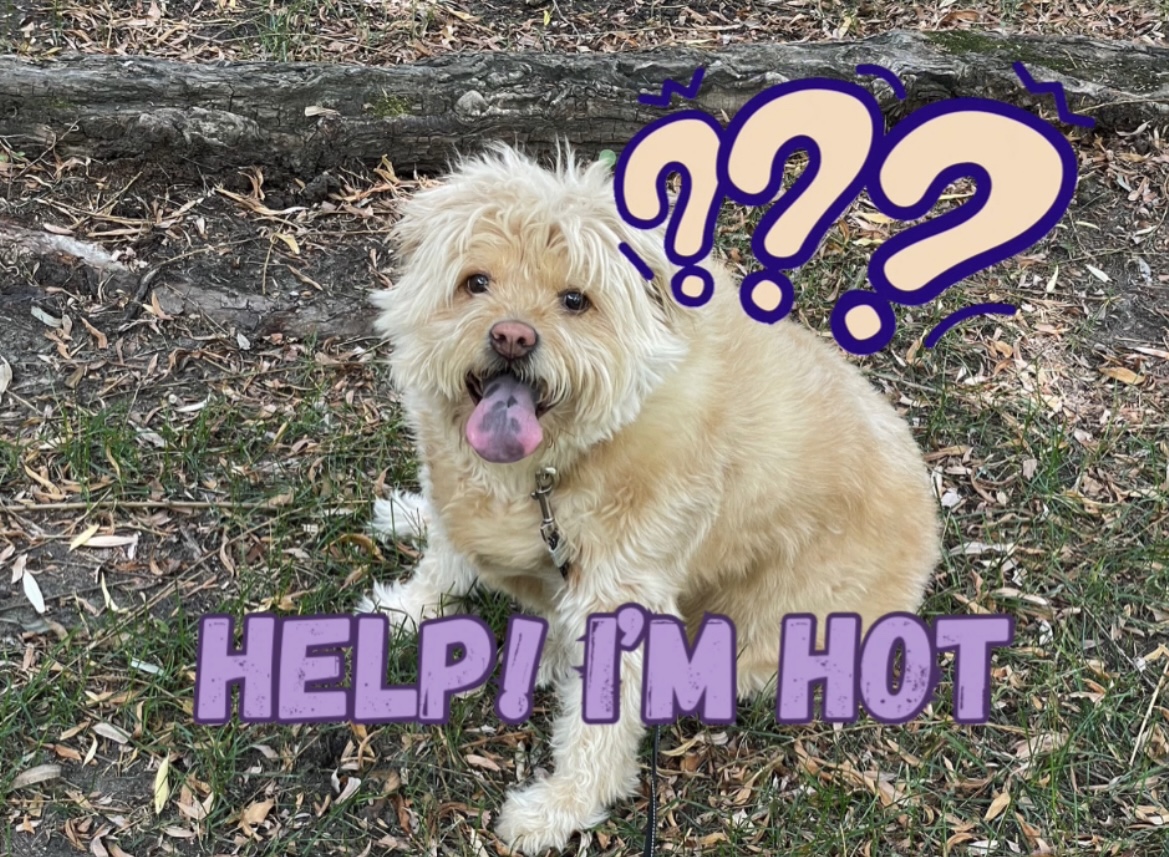

DID YOU KNOW YOU SHOULD NEVER POUR COLD WATER OR PUT A COLD WET TOWEL ON THEIR BACK?
Summertime is a great time to go out, get some good exercise, breath in some fresh air, and just have some fun during the day. That’s why you often see dogs and their owners go on walks more frequently in the Summer than any other time of the year.
What we need to remember is there are dangers and safety risks not just for people, but for our beloved fur babies as well.
In this article, you will:
- Learn the top 5 reasons why dogs pant
- Learn what heat exposure sickness is and how it can affect a dog
- Learn what to do when your dog is affected by heat
- Learn the top 8 preventive measures to care for your dog in the heat
The top reasons why dogs pant
Dogs have a natural tendency to pant. It’s their natural tendency to cool off after strenuous exercise or playful activities. But when their panting and breathing unusually reaches a rate higher than 40 breaths per minute, we should be on high alert.
What we should take note of is the activity they had prior to their panting.
These are the top 5 reasons why dogs pant:
- Happiness
- When they feel loved and cared for, they show it through kisses and panting
- Excitement
- Seeing new animals and people they know can mean potential playtime and treats.
- Playtime
- Just like breathing is necessary for exercise, panting is essential during playtime.
- Emotional Stress
- Dogs experience anxiety and depression with a change of environment.
- Physical Pain or Discomfort
- There could be an injury or sickness your dog may be secretly hiding, and the only true sign is excessive panting.
High temperatures and excessive heat can cause dogs to become overheated and sick.
Heat Exposure Risk and Safety
What is heat exposure sickness?
Heat exposure sickness is exactly how it sounds. Prolonged exposure to extreme heat or even moderate heat can be very dangerous. The two most widely known sicknesses which are common in temperatures above 80°F (26.7°C) are heat exhaustion and heatstroke.
Heat exhaustion happens when the body loses too much water and salt, through long periods of sweating. Cooling down starts to become difficult at this stage.
Heatstroke however, is the loss of the body’s natural ability to cool down from high internal temperature, which can become life-threatening. Medical treatment is highly recommended at this stage.
Why is it important to know about it?
During heat exhaustion, the affected person can start to feel various symptoms:
- Confusion or Dizziness
- Faint, faster pulse
- Headache
- Shortness of breath
- Pale or clammy looking skin
- Parched or dry-mouth
- Weakness or drowsiness
During heatstroke, the affected person can exhibit serious symptoms:
- Internal temperature above 104° (40°C)
- Loss of consciousness
- Red or dry looking skin
- Strong, rapid pulse
While heat exhaustion can be treated by the individual experiencing these symptoms, people experiencing heatstroke should seek medical treatment and/or attention. Most of the time, a call to 911 (or your local emergency line) is needed.
How can this affect my dog?
Dogs can also develop heat rash which causes physical discomfort, but is considered less life-threatening. Even though, it is not deadly, it still should be taken seriously.
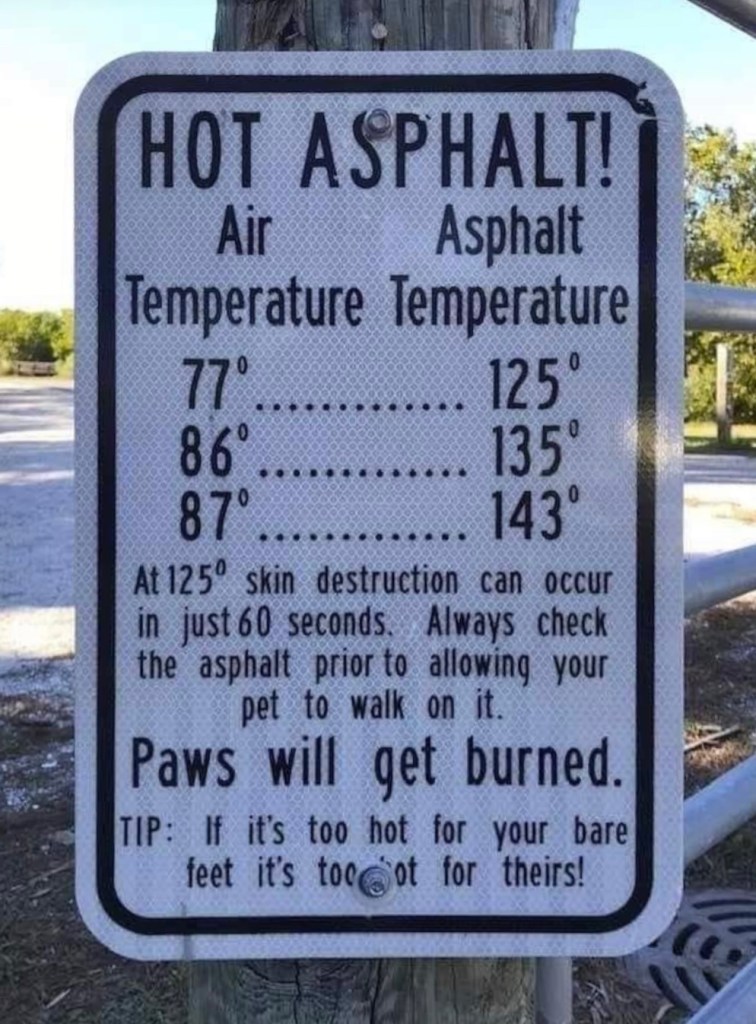
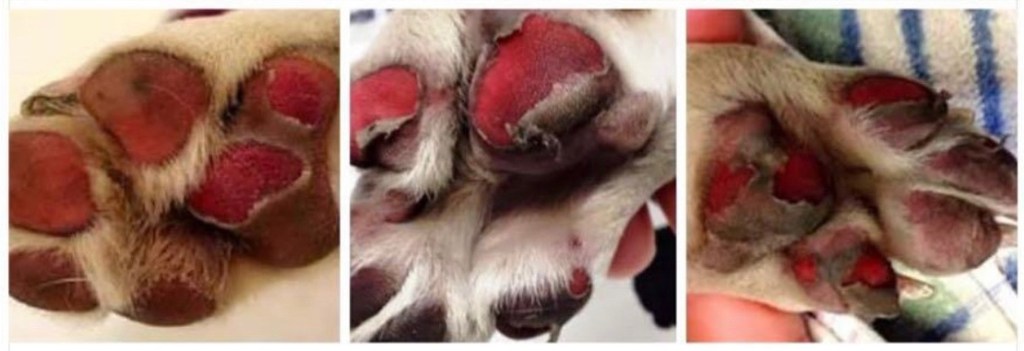
Asphalt gets hot, paws get burnt. It only takes a couple minutes to damage the pads on a dog’s paws. Look at the photo above as reference.
We’ve done an independent analysis of both concrete and asphalt surface temperatures in hot climates as shown in the chart below:

Note: Not all parts of the world experience the same level of heat. Conditions vary from place to place, region to region, country to country.
Rule of thumb: If you can curl your thumb and press it onto the surface without pulling up, it’s safe enough. If not, it’s much too hot for a dog to walk on.
In hot weather, here are the symptoms to look for in dogs:
- Blisters
- Bloody urine
- Drooling
- Dry nose
- Excessive panting
- Faster pulse
- Foul odor
- Higher internal temperature
- Mood changes
- Redness
- Tenderness of the skin
- Vomiting
It’s important to recognize these signs and take the proper precautions and safety measures in treating dogs for heat exposure sickness.
Animal lovers should never make the mistake of throwing cold water on an overheated dog or putting a cold wet towel on their back. You will see the opposite effect.
The result can be a very slow, painful death. If you try to help an overheated dog in this manner, they will surely die.
Overheating treatment
According to Veterinary health studies and Pet Clinics, overheated animals should be treated right away. Proper treatment can lead to a quicker recovery.
When cooling off our dogs, we should be very careful and mindful as to not worsen their condition. An extreme temperature change can shock their systems and cause more severe symptoms. Dogs can form life-threatening blood clots.
Due to cold temperature, veins and arteries contract. Due to high temperature, proteins in the blood can clot, which makes the blood thicken and become viscous.
With a combination of the two, blood starts to coagulate and the heart can have a very hard time or can no longer circulate the blood, making the organs fail one by one due to lack of oxygen.
HERE’S WHAT YOU SHOULD DO…
Gradually reduce their temperature using the following steps:
- Move the dog into a shaded or dark area.
- Give the dog cool (not cold) or lukewarm water to drink.
- Use a spray bottle to put an air cooled mist around them.
- Cool the soles of their feet and chest/lower abdomen with a damp towel.
- Get them inside into a fan cooled room.
- Call the vet for more help, if symptoms persist.
Most dogs are resilient and can recover from the heat. But, there are three specific types of dogs that need special attention during these temperatures:
1. Flat-faced dogs also known as brachycephalics. Any dog with a flat, wide skull and a short nose such as Boston terriers, Bulldogs, Pugs, Pekingese, and Shih Tzus.
2. Hyperactive dogs such as Labrador or Golden Retrievers.
3. Cold weather work dogs such as Saint Bernards and Huskies.
Best practices and Preventive Care
To ensure that dogs can live to their fullest potential, we need to safeguard their health by using safe practices. It begins with getting your dogs acclimated to hot temperatures.
Dogs don’t have a way to sweat. They cool off by panting, but it takes time to get used to being outside in hot weather. Take them out during the daytime when the heat is not at it’s highest peak.
As days become weeks, their bodies will adjust to the heat, but that doesn’t mean they can be left unattended. Always time the amount of heat exposure and be sure to keep eye on their behavior.
Here’s the top 8 ways to care for your dog in the heat:
- Never leave them unattended, especially in a vehicle
- Even with the weather at 65°F (18°C) and windows slightly down, vehicles can quickly reach hazardous levels.
- Limit their exposure and playtime
- Dogs can quickly overheat in about 10 minutes
- Walk them in the grass
- Avoid asphalt and other hot surfaces
- Take periodic breaks
- Keep near cool shaded areas
- Keep them hydrated
- Bring plenty of water to drink
- Use damp towels
- It can keep them from overheating
- Keep the air circulating
- Turn on a cooling fan or leave the AC running
- Monitor their behavior
- Know the signs for heatstroke and other heat related illnesses
Even though we’d love to think of our dogs as our personal superheroes, we need to also be sure to protect them as well. They are even more susceptible to these conditions when it comes to the heat.
Knowing what to do and look for will keep you and your dog happy for years to come.
Have a great day. Thanks for reading.
If you liked this article, please consider subscribing to our pawsome blog.
Also consider following us on Instagram and Facebook for our weekly photos and creative videos of the pets we care for.
 Petraordinary Pet Services
You must be logged in to post a comment.